
Abstract
BACKGROUND/AIMS
Elbow arthroscopy is a critical procedure for the treatment of elbow disorders, largely due to advancements in arthroscopic technology. While the field has seen significant growth, no comprehensive bibliometric analysis has been conducted to map research trends, key contributions, and gaps in this area. This study aimed to fill this gap by conducting a bibliometric analysis of articles published on elbow arthroscopy between 1986 and 2023, with the goal of understanding the evolution of the field, identifying influential research, and guiding future studies.
MATERIALS AND METHODS
Articles on elbow arthroscopy published between 1986 and 2023 from the Web of Science database were retrieved and subjected to bibliometric scrutiny. After an initial retrieval of 343 articles, we excluded irrelevant categories and focused on the 312 studies that were most relevant to the field. Using VOSviewer software, bibliometric network visualizations and specific result mappings were conducted. Citation analysis was employed to discern prominent journals and articles, while keyword clustering and trend analyses were performed to investigate the thematic landscape of the research.
RESULTS
Our analysis of 312 articles on elbow arthroscopy published between 1986 and 2023 revealed a significant increase in the number of publications after 2006. The majority of these publications (82.5%) were original research articles. The average citation count per article was 13.14, with an H-index of 36. The most frequently used keywords were “elbow” and “arthroscopy,” with “Complications of Elbow Arthroscopy” being the most cited study. Prominent journals such as “Arthroscopy: The Journal of Arthroscopic & Related Surgery” and influential authors like “Van Den Bekeron MPJ” and “O’Driscoll SW” were identified. Additionally, the United States was found to be the leading contributor in this field.
CONCLUSION
This study offers insights into the evolution and trends of elbow arthroscopy research. The findings serve as a valuable resource for guiding future investigations in this field, while the keyword analysis provides a roadmap for researchers in formulating new studies.
Keywords: Elbow arthroscopy, bibliometric analysis, citation analysis, Web of Science, VOSviewer
INTRODUCTION
Knee and shoulder arthroscopy is a long-established primary treatment modality for various joint pathologies. In contrast, elbow arthroscopy has historically faced limitations in terms of both case volume and widespread acceptance as a viable treatment option. Originally employed primarily for diagnostic purposes due to the complexities inherent in the elbow joint,- elbow arthroscopy has undergone significant advancements in recent decades, driven by improved surgical techniques, enhanced equipment, and a deeper understanding of arthroscopic principles.-
As highlighted by pioneering cadaver studies conducted by Burman, early indications for elbow arthroscopy have primarily focused on diagnostic exploration and removal of loose bodies. However, subsequent research has broadened the scope of elbow arthroscopy to encompass a broader spectrum of pathologies, ranging from lateral epicondylitis and synovitis to osteochondritis dissecans and contracture release., , Despite the challenges posed by the complex anatomy of the elbow joint and its proximity to vital neurovascular structures, elbow arthroscopy has steadily increased in recent years.,
Indeed, indications for elbow arthroscopy have expanded to include the management of complex disorders, such as arthroscopically assisted open reduction of intra-articular fractures, ligament repair or reconstruction, and total synovectomy.-This evolution reflects not only advancements in surgical technique but also a growing recognition of elbow arthroscopy’s efficacy and versatility in addressing a diverse array of elbow pathologies.
The internet’s accessibility has revolutionized research in many fields, particularly medicine, providing researchers with unprecedented access to a vast amount of up-to-date literature and data. However, this abundance of information also presents challenges such as information overload and difficulty in identifying relevant research despite the shear volume of publications.
A comprehensive bibliometric analysis is warranted to address these challenges and contribute to the understanding of research trends in elbow arthroscopy. Although significant developments have occurred in this field in recent years, current and comprehensive bibliometric analysis literature must be improved. Therefore, we aimed to summarize global research output on elbow arthroscopy by conducting a bibliometric analysis of publications published between 1986 and 2023. This analysis will examine countries and authors with the highest publication output and explore highly influential articles and leading scholarly journals.
Given the increasing utilization of elbow arthroscopy and the vast amount of literature currently available, a comprehensive bibliometric analysis is needed to map the research landscape in this field. Despite significant advancements in elbow arthroscopy, no detailed bibliometric study has systematically analyzed global research trends, identified key contributors, or highlighted influential publications. Therefore, the aim of this study was to conduct a bibliometric analysis of elbow arthroscopy publications published between 1986 and 2023. Specifically, this analysis addresses the following research questions: 1) Which countries and authors have the highest publication output? 2) What are the most influential articles and leading scholarly journals in this field? 3) How has the research focus evolved over time, and what are the emerging trends?
MATERIALS AND METHODS
We conducted a comprehensive systematic literature search using the Web of Science [(WoS); Clarivate Analytics, Philadelphia, Pennsylvania] database, covering SCI-expanded, SSCI, AHCI, CPCI-S, CPCI-SSH, ESCI, BKCI-S, and BKCI-SSH (accessed on February 16, 2024). Our search targeted all articles related to elbow arthroscopy. We extracted publications containing the keyword “elbow arthroscopy” in the title, spanning the period from 1986 to 2023, from the WoS database. These publications were then subjected to bibliometric analysis, including network visualizations conducted using VOSviewer software (version 1.6.15; Center for Science and Technology Studies, The Netherlands).
We specifically selected the WoS database due to its established reputation and comprehensive coverage of high-quality academic literature. WoS is widely regarded as the gold standard for bibliometric research, providing reliable and robust tools, such as citation analysis, H-index calculation, and impact factor metrics, which are critical for ensuring the accuracy and consistency of research outcomes. Although databases such as Scopus, PubMed, and Google Scholar offer valuable insights, they vary in scope and may not always provide the same level of analytical depth or reliability. By focusing on the WoS, we aimed to maintain the integrity and rigor of the study by leveraging a singular, well-respected source to produce findings that are both credible and widely recognized in the academic community.
We analyzed publications using various research parameters, including publication year, authors’ affiliations, keywords, and citation counts. Notably, ethical approval was not obtained for this research because it utilized publicly accessible databases. This study involved online databases; thus, no informed consent was obtained.
Statistical Analysis
The network visualization map represents the outcomes using labels, circles, and lines. Larger circles indicate higher contributions by respective items, whereas dense clusters of items are represented by thicker lines, indicating strong relationships. In addition, we employed a density visualization map, which assigned colors on a scale from blue to red based on item density. Points with higher densities and greater neighboring item weights are depicted on the red end of the scale.
RESULTS
We accessed 343 scientific studies. However, we limited our study to 1986-2023 and excluded categories such as “Veterinary Sciences,” “Medicine General Internal,” “Zoology,” and “Agriculture Dairy Animal Science,” which are irrelevant in the WoS database. As a result, we analyzed 312 scientific studies.
A total of 257 (82.5%) of these publications were journal articles, 23 (7.4%) were review articles, 12 (4%) were editorial material, 7 (2.1%) were book chapters, 6 (1.8%) were proceeding papers, and 7 (2.2%) were corrections and other publications. A total of 286 (91.7%) of the articles were published in English. The rest were published in other languages (German: 18, French: 5, Czech: 2, and Russian: 1). The journal articles had 4101 citations (without self-citations: 2547). The average number of citations per article was 13.14, and the overall H-index for all included journal articles was 36.
Trends of Annual Articles and Citations
shows the distribution of the number of articles and total citations by years. The number of articles on elbow arthroscopy and their total citations significantly increased in 2006 compared with the preceding years. Furthermore, the highest number of citations and studies related to this field was recorded in 2016. Additionally, there has been a clear trend of increasing studies and citations related to the field over the years.
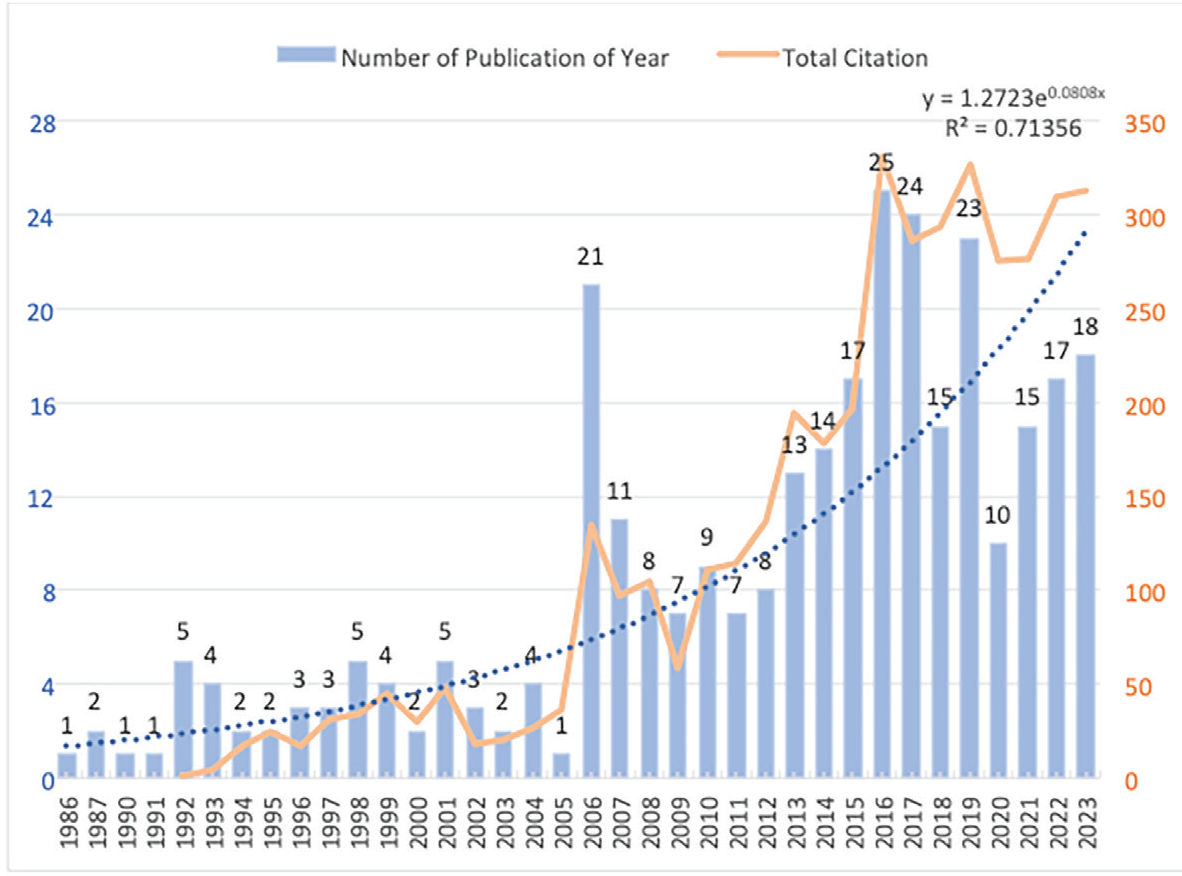
To better understand the trend of scientific studies conducted on this subject between 1986 and 2023, an exponential trend line was drawn for the publications. Upon examining the results, the exponential function Y=1,272e0,0808x (where Y represents annual publications and x represents years, R²=0.6161) indicates the potential of studies related to elbow arthroscopy and suggests that research trends will continue.
Keywords and Trends
Our analysis included 312 scientific publications that collectively employed 93 distinct keywords. lists the five most frequently used keywords and their total link strength. In addition, illustrates the network visualization map derived from the citation analysis of these articles. The total link strength represents the frequency at which keywords appear together in the analyzed publications.
Table 1. The top five trend keywords on elbow arthroscopy
Keyword | Occurrence | Total link strength |
|---|---|---|
Elbow | 18 | 69 |
Arthroscopy | 17 | 65 |
Elbow arthroscopy | 15 | 61 |
Complications | 7 | 27 |
Osteochondritis dissecans | 5 | 22 |
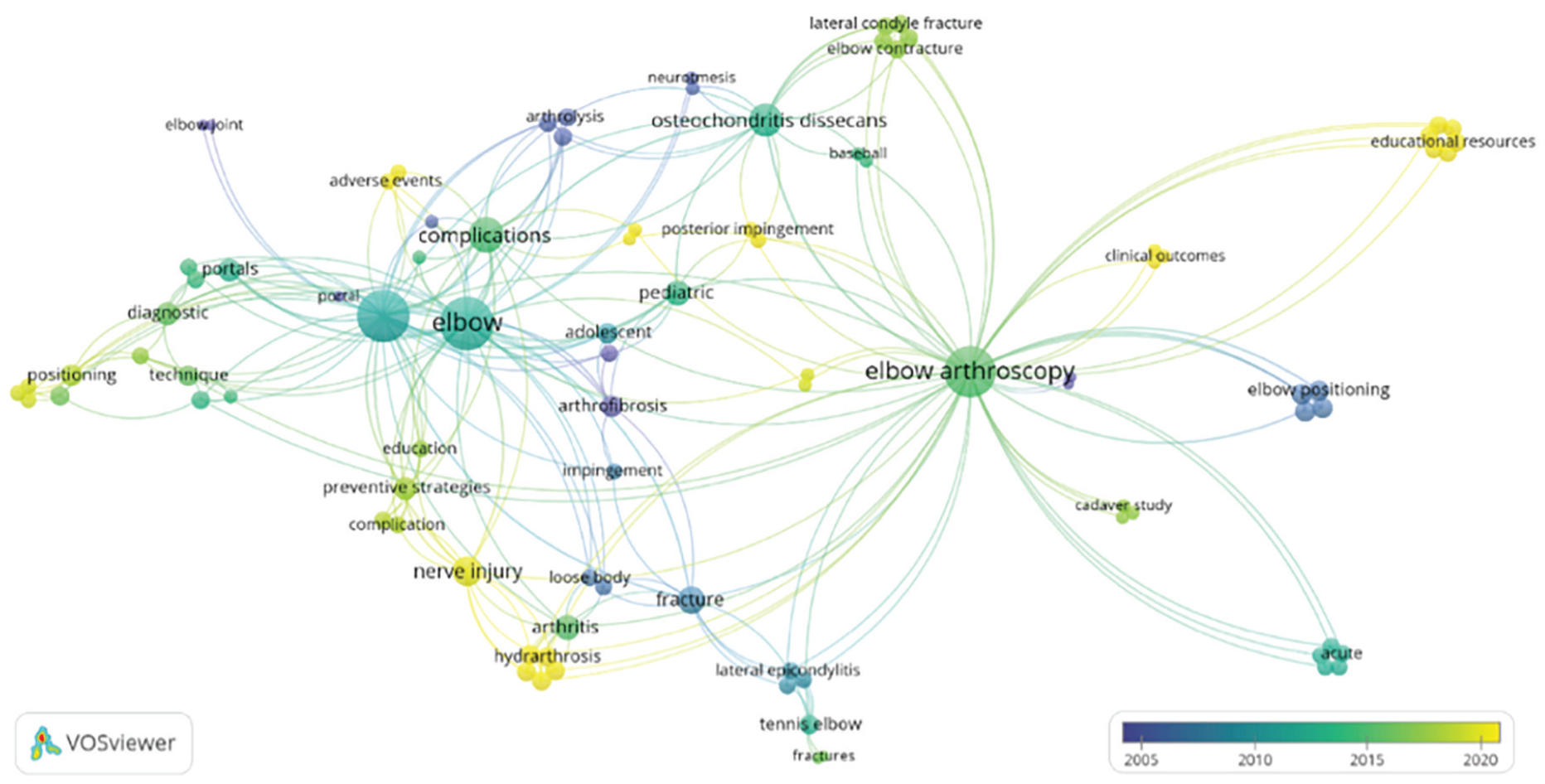
The most prominent keywords regarding scientific studies on elbow arthroscopy are “elbow,” “arthroscopy,” “elbow arthroscopy,” “complication,” and “osteochondritis dissecans.” In addition, “nerve injury,” “fracture,” “arthritis,” “pediatric,” and “diagnostic” are among the most frequently used keywords.
Citation Analysis
presents the 10 most cited articles and their respective citation counts. Each of these articles has garnered more than 50 citations. The article with the highest number of citations (212) was published in the Journal of Bone and Joint Surgery by Kelly et al.in 2001. Furthermore, it is noteworthy that five out of the top 10 most cited articles were published in the journal Arthroscopy: The Journal of Arthroscopic & Related Surgery.
Table 2. The 10 most cited articles on elbow arthroscopy
Name of the article | Author(s) | PY | Journal | TC |
|---|---|---|---|---|
1. Complications of elbow arthroscopy | Kelly et al.20 | 2001 | Bone and Joint Surgery | 215 |
2. Complete transection of the median and radial nerves during arthroscopic release of post-traumatic elbow contracture | Haapaniemi et al.21 | 1999 | Arthroscopy: Journal of Arthroscopic and Related Surgery | 88 |
3. Arthroscopy of the elbow: anatomy, portal sites, and a description of the proximal-lateral portal | Stothers et al.22 | 1995 | Arthroscopy: Journal of Arthroscopic and Related Surgery | 86 |
4. Intraarticular capacity and compliance of stiff and normal elbows | Gallay et al. | 1993 | Arthroscopy: Journal of Arthroscopic and Related Surgery | 84 |
5. Snapping plica associated with radiocapitellar chondromalacia | Antuna and O’Driscoll | 2001 | Arthroscopy: Journal of Arthroscopic and Related Surgery | 79 |
6. Magnetic resonance imaging of the elbow | Murphy | 1992 | Radiology | 76 |
7. Elbow arthroscopy: early complications and associated risk factors | Nelson et al. | 2014 | Journal of Shoulder and Elbow Surgery | 74 |
8. Anterior interosseous nerve injury following elbow arthroscopy | Such and Poehling | 1997 | Arthroscopy: Journal of Arthroscopic and Related Surgery | 72 |
9. Osteochondritis dissecans of the capitellum | Baker III et al. | 2010 | The American Journal of Sports Medicine | 70 |
10. Arthroscopic treatment of post-traumatic elbow contracture | Ball et al. | 2002 | Journal of Shoulder and Elbow Surgery | 70 |
PY: Publication year; TC: Total citation.
Active Journals
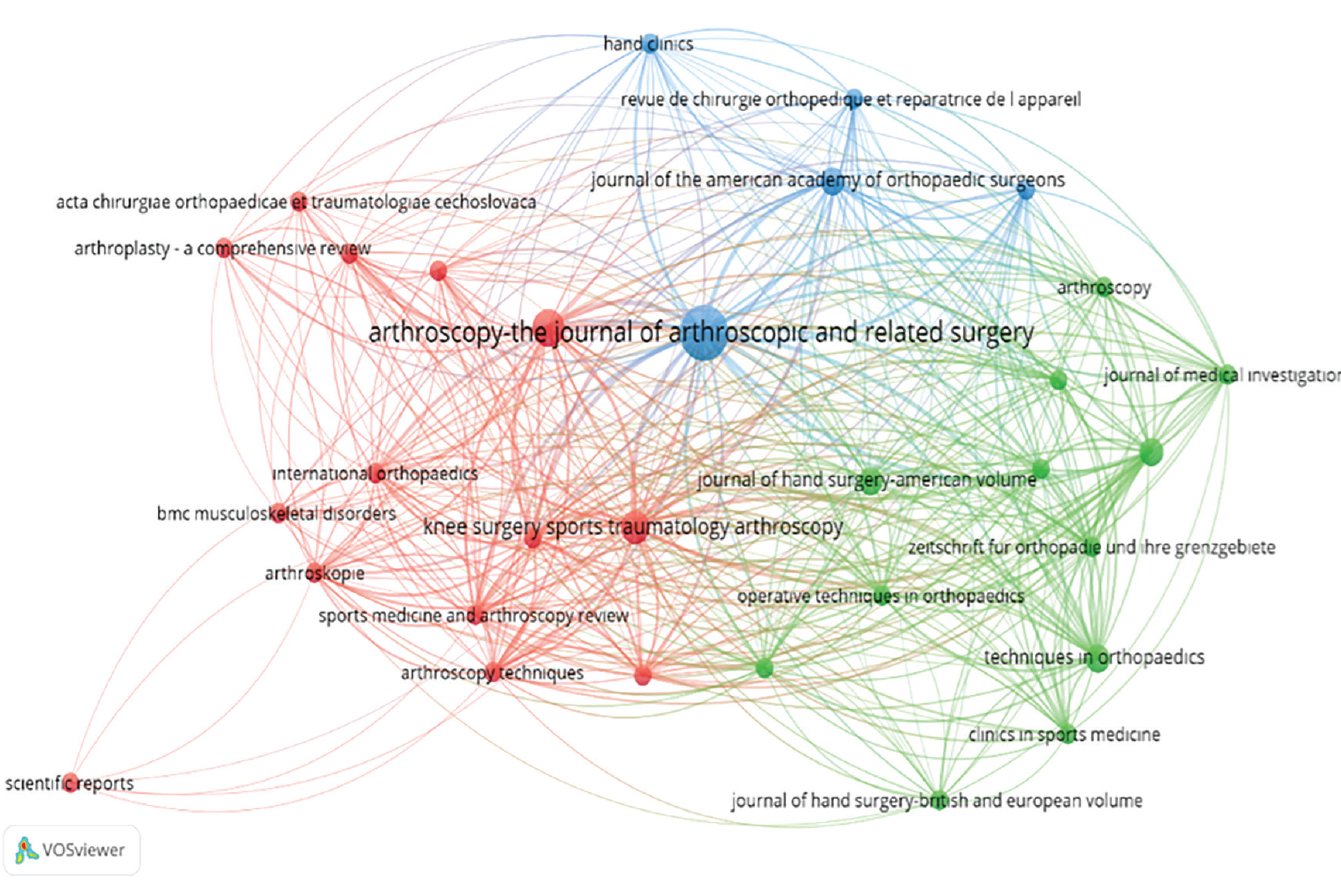
Thirty-two journals have published 312 scientific publications. presents the top 10 journals that produced the most publications. The table lists the total number of publications and citations for each article. The total link strength indicates the article’s citation or that the article is related to other studies and has a place in the literature. shows a citation network visualization map of the most active journals.
Table 3. The 10 most active journals on elbow arthroscopy
Journals | NP | TC | TL | C | CQ |
|---|---|---|---|---|---|
Arthroscopy: Journal of Arthroscopic and Related Surgery | 10 | 184 | 1075 | SCIE | Q1 |
Knee Surgery Sports Traumatology Arthroscopy | 3 | 39 | 653 | SCIE | Q1 |
World J Orthopedics | 1 | 14 | 527 | ESCI | - |
Journal of Shoulder and Elbow Surgery | 4 | 96 | 517 | SCIE | Q2 |
Operative Techniques in Sports Medicine | 2 | 1 | 480 | SCIE | Q4 |
Orthopedic Techniques | 2 | 8 | 444 | ESCI | - |
Journal of the American Academy of Orthopedic Surgeons | 2 | 94 | 369 | SCIE | Q1 |
Sports Medicine and Arthroscopy | 1 | 3 | 343 | SCIE | Q3 |
Journal of Bone and Joint Surgery-American Volume | 1 | 215 | 312 | SCIE | Q1 |
Arthroscopy Techniques | 1 | 9 | 274 | ESCI | - |
NP: Number of publications, TC: Total citation, TL: Total link strength C: Category, CQ: Category Quartile.
Active Authors
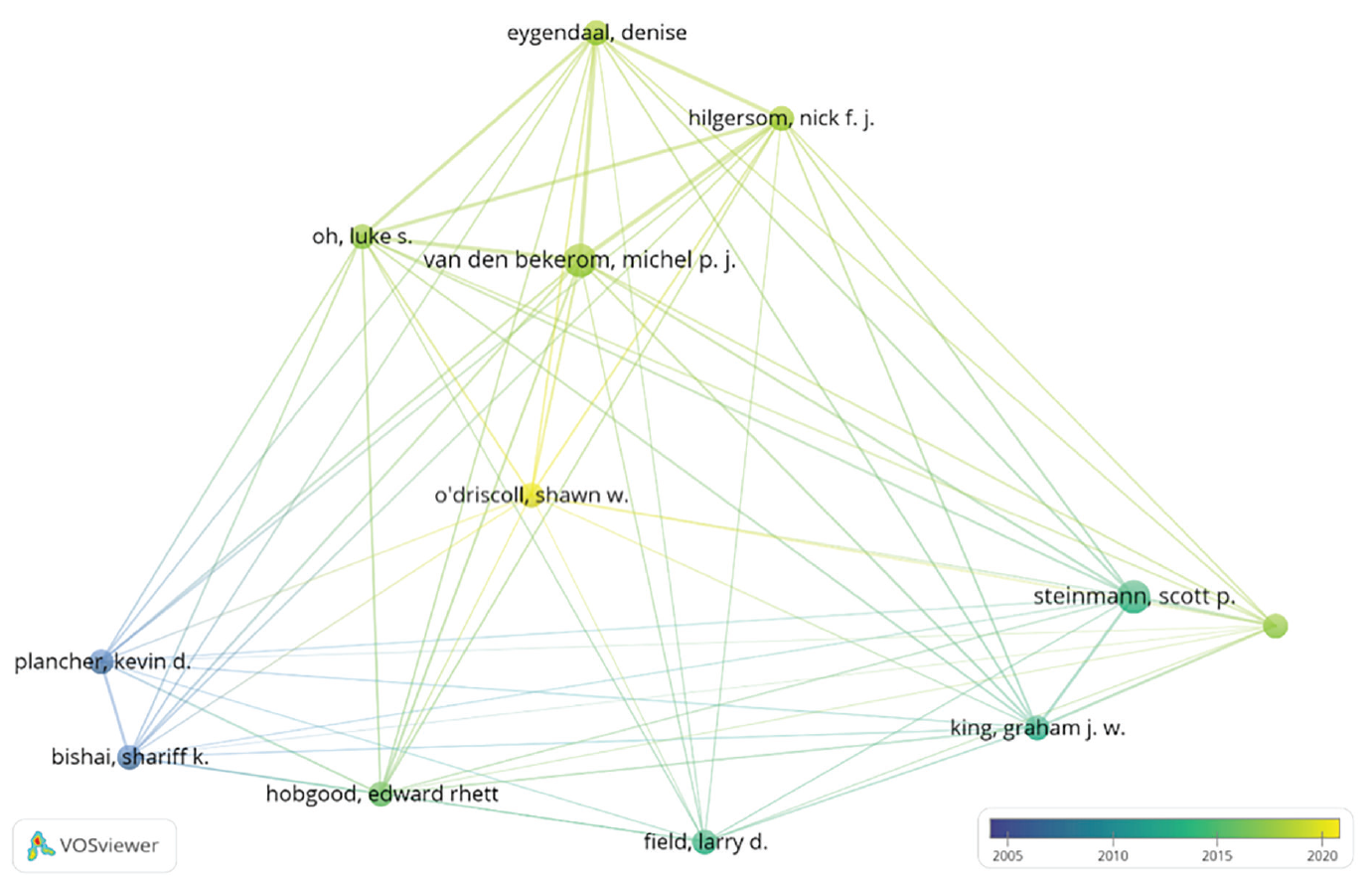
The productivity of authors within the scope of elbow arthroscopy by year is presented in . When analyzing the productivity of authors who have published in the field of elbow arthroscopy, the most prominent ones were “Van Den Bekeron MPJ,” “Eygandal D,” “Hilgersom NFC,” “Oh LS,” “King GJW” and “Steinmann SP” in that order. Additionally, authors such as “Bishai SK,” “Plancher KD,” “Hobgood ER,” “O’driscoll SW,” and “Field LD” were also found to have notable contributions in this area.
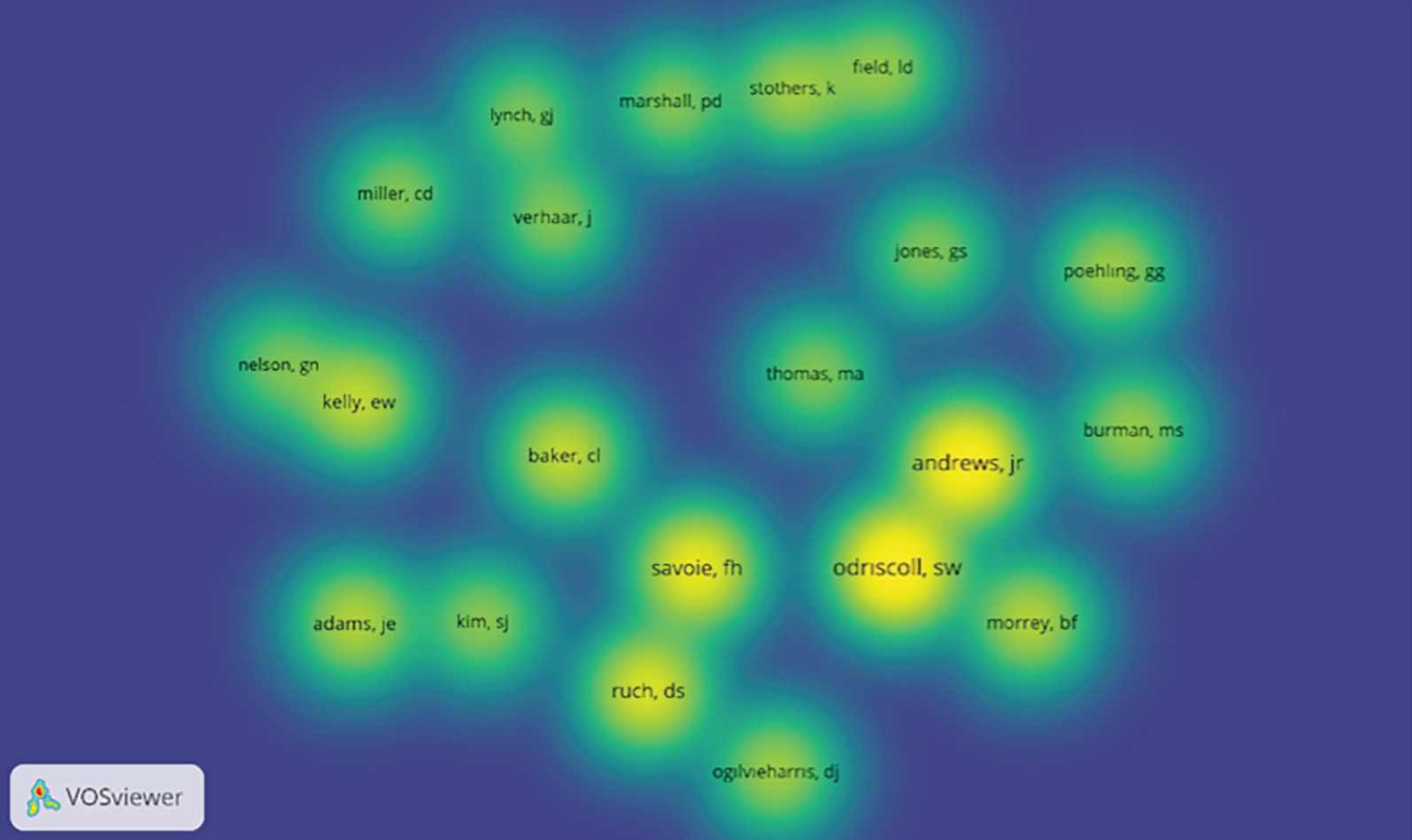
presents a co-citation network analysis of authors publishing in the field of elbow arthroscopy. The authors with the most significant number of shared citation networks within the realm of elbow arthroscopy were “O’driscoll SW,” “Andrews JR,” “Savoie FH,” “Ruch DS,” “Baker CL,” “Morrey BF,” “Ogilvie-Harris, DJ,” “Field LD,” “Stothers K,” and “Thomas MA.”
Active Countries
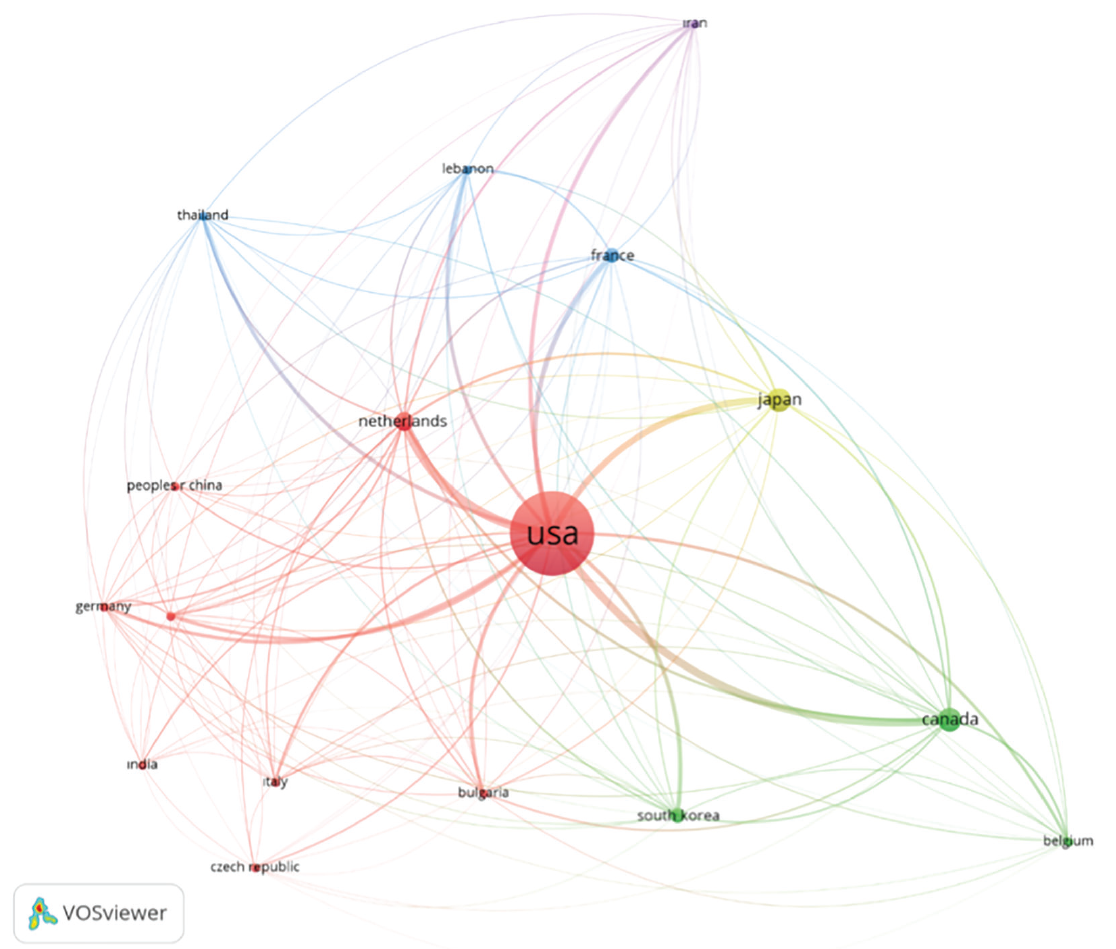
A total of 312 scientific publications were published with addresses from 18 countries. The United States ranked first in terms of productivity. The active countries producing publications and citations are the United States (publications: 28, citations: 700), the Netherlands (publications: 3, citations: 39), Canada (publications: 4, citations: 114), Japan (publications: 4, citations: 15), and France (publications: 2, citations: 12). The international collaboration network map among countries that have published articles together is shown in .
DISCUSSION
In this study, we conducted comprehensive bibliometric analyses, including keyword analysis, citation analysis for articles and journals, and an examination of international collaborations, marking the first time such analyses have been performed in this area. Our research is the most exhaustive examination of the literature, analyzing the highest number of articles on this subject.
Our comprehensive bibliometric analysis covering 312 scientific publications revealed that the annual publication count ranged from 1 to 25 between 1986 and 2023. A significant increase in articles on elbow arthroscopy was particularly notable after 2006. This trend suggests that advances in arthroscopic techniques and growing clinical interest have driven more research in this area, potentially leading to improved patient outcomes.
Furthermore, our evaluation of keyword analysis results identified the top five topics investigated in relation to elbow arthroscopy: “elbow,” “arthroscopy,” “elbow arthroscopy,” “complication,” and “osteochondritis dissecans.”
The article with the most significant impact, measured by the mean of the total number of citations, was “Complications of elbow arthroscopy,” published by Kelly et al. in the Journal of Bone and Joint Surgery-American Volume in 2001. The second most cited article was “Complete transection of the median and radial nerves during arthroscopic release of post-traumatic elbow contracture,” which was published by Haapaniemi et al. in Arthroscopy: The Journal of Arthroscopic & Related Surgery in 1999. The third most cited article was “Arthroscopy of the Elbow: Anatomy, Portal Sites, and a Description of the Proximal Lateral Portal,” which was published by Stothers et al. in Arthroscopy: The Journal of Arthroscopic & Related Surgery in 1995. The remaining highly cited articles are presented in . Interestingly, five out of the top 10 most cited articles were published in the same journal, “Arthroscopy: The Journal of Arthroscopic & Related Surgery.” Researchers interested in this subject should review these studies because their significance is primarily determined by attribution and co-citation analysis. Therefore, the articles presented in can be considered as the cornerstone research on elbow arthroscopy.
lists the most active journals in the field. Researchers seeking to publish manuscripts on this subject may find it helpful to consider these journals. Among the most active journals, those producing 10 or more publications were Arthroscopy: The Journal of Arthroscopic & Related Surgery. When evaluating journals based on the number of citations per article, the three most active journals were the Journal of Bone and Joint Surgery-American Volume, Arthroscopy: The Journal of Arthroscopic & Related Surgery, and the Journal of Shoulder and Elbow Surgery. Researchers who want their articles to be cited more frequently can first consider these journals. Publishing in these journals may increase the visibility and impact of future research because these platforms are recognized for their high citation rates and relevance.
When the analyzed articles were evaluated based on the total number of citations, the most cited study was Kelly et al.’s “Complications of elbow arthroscopy,” published in the Journal of Bone and Joint Surgery-American Volume in 2001.
When analyzing the publication distributions of countries worldwide, we observed that developed countries are the most prolific producers of publications in elbow arthroscopy, with notable contributors including the United States, the Netherlands, Canada, Japan, and France. This observation aligns with the findings of previous bibliometric analyses. This finding supports the notion that the economic size or developmental level of countries can indeed have a notable impact on academic publication productivity., This finding suggests that future research should explore ways to support scientific output in developing countries, potentially enhancing global collaboration and knowledge sharing. Additionally, the analysis of coauthorship between countries revealed that geographic region was the main factor associated with collaboration on elbow arthroscopy, which is consistent with previous evidence.,
Study Limitations
This study has some limitations that need to be acknowledged. This study only reviewed articles published in the WoS database without including PubMed and Scopus. Although bibliometric studies often analyze many articles, excluding multiple databases may limit the comprehensiveness of the findings. However, it is essential to note that using multiple databases can lead to the inclusion of the same articles from different sources, potentially skewing the results by duplicating data. The decision to focus exclusively on WoS was made to ensure the consistency and reliability of the data. Nonetheless, future studies could consider incorporating multiple databases to provide a more comprehensive analysis while addressing potential duplication issues to ensure the reliability of the results.
CONCLUSION
Our study on elbow arthroscopy, reflecting the increasing volume of literature on this topic, summarized 312 scientific publications published between 1986 and 2023. The United States has emerged as the most active publishing country. At the same time, the top three journals for publishing articles were the Journal of Bone and Joint Surgery-American Volume, Arthroscopy: The Journal of Arthroscopic & Related Surgery, and the Journal of Shoulder and Elbow Surgery. By examining the development of topics studied over the years, identifying trending topics, and noting topics with higher citation rates, researchers can gain insights into new studies in this field. Therefore, our study is valuable for clinicians and scientists who wish to understand the global research landscape on elbow arthroscopy. Furthermore, keyword analysis can help professionals in designing new studies and enhance the overall advancement of knowledge in this field.
MAIN POINTS
- Although significant developments have occurred in the field of elbow arthroscopy in recent years, current and comprehensive bibliometric analysis still needs to be improved in the literature. This study includes global research output in elbow arthroscopy by conducting a bibliometric and visuality analysis.
- Our study on elbow arthroscopy, reflecting the increasing volume of literature on this topic, summarizes 312 scientific publications published between 1986 and 2023.
- This study will guide clinicians and scientists seeking to better understand the global research landscape on elbow arthroscopy.
ETHICS
Ethics Committee Approval: Notably, ethical approval was not obtained for this research because it utilized publicly accessible databases.
Informed Consent: This study involved online databases; thus, no informed consent was obtained.
Footnotes
Authorship Contributions
Concept: S.Ç., A.İ.K., M.A., M.Ay., Design: S.Ç., A.İ.K., E.Ş., Data Collection and/or Processing: S.Ç., A.İ.K., F.Ş., M.Ak., M.Ay., E.Ş., Analysis and/or Interpretation: S.Ç., F.Ş., Literature Search: S.Ç., A.İ.K., F.Ş., M.Ak., M.Ay., E.Ş., Writing: S.Ç., A.İ.K., M.Ak., M.Ay., E.Ş.
Conflict of Interest: No conflict of interest was declared by the authors.
Financial Disclosure: The authors declared that this study had received no financial support.
Footnotes
Ethics
Ethics Committee Approval: Notably, ethical approval was not obtained for this research because it utilized publicly accessible databases.
Informed Consent: This study involved online databases; thus, no informed consent was obtained.
Footnotes
Authorship Contributions
Concept: S.Ç., A.İ.K., M.A., M.Ay., Design: S.Ç., A.İ.K., E.Ş., Data Collection and/or Processing: S.Ç., A.İ.K., F.Ş., M.Ak., M.Ay., E.Ş., Analysis and/or Interpretation: S.Ç., F.Ş., Literature Search: S.Ç., A.İ.K., F.Ş., M.Ak., M.Ay., E.Ş., Writing: S.Ç., A.İ.K., M.Ak., M.Ay., E.Ş.
Conflict of Interest: No conflict of interest was declared by the authors.
Financial Disclosure: The authors declared that this study had received no financial support.
References
Savoie FH 3rd. Guidelines to becoming an expert elbow arthroscopist. Arthroscopy. 2007; 23(11): 1237-40.
Burman M. Arthroscopy of the elbow joint: A cadaver study. J Bone Joint The Journal of Bone & Joint Surgery. 1932; 14 (2): 349. Available from: https://www.jbjs.org/reader.php?rsuite_id=138112&source=The_Journal_of_Bone_and_Joint_Surgery/14/2/349&topics=eb#info
Lynch GJ, Meyers JF, Whipple TL, Caspari RB. Neurovascular anatomy and elbow arthroscopy: Inherent risks. Arthroscopy. 1986; 2(3): 191-7.
Andrews JR, Carson WG. Arthroscopy of the elbow. Arthroscopy. 1985; 1(2): 97-107.
Blonna D, Bellato E, Marini E, Scelsi M, Castoldi F. Arthroscopic treatment of stiff elbow. ISRN Surg. 2011; 2011: 378135.
Pederzini LA, Nicoletta F, Tosi M, Prandini M, Tripoli E, Cossio A. Elbow arthroscopy in stiff elbow. Knee Surg Sports Traumatol Arthrosc. 2014; 22(2): 467-73.
Ahmed AF, Alzobi OZ, Hantouly AT, Toubasi A, Farsakoury R, Alkhelaifi K, et al. Complications of elbow arthroscopic surgery: a systematic review and meta-analysis. Orthop J Sports Med. 2022; 10(11): 23259671221137863.
Li Y, Guo S, Li S, Yang G, Lu Y. Is there any difference in clinical outcome between open and arthroscopic treatment for tennis elbow? a systematic review and meta-analysis. Orthop Surg. 2023; 15(8): 1931-43.
Eames MHA, Bain GI. Distal biceps tendon endoscopy and anterior elbow arthroscopy portal. Tech Shoulder Elbow Surg. 2006; 7(3): 139-42.
Rahusen FT, Brinkman JM, Eygendaal. Results of arthroscopic debridement for osteochondritis dissecans of the elbow. Br J Sports Med. 2006; 40(12): 966-9.
Steinmann SP, King GJ, Savoie FH 3rd. Arthroscopic treatment of the arthritic elbow. Instr Course Lect. 2006; 55: 109-17.
Intravia J, Acevedo DC, Chung WJ, Mirzayan R. Complications of elbow arthroscopy in a community-based practice. Arthroscopy. 2020; 36(5): 1283-90.
Haasters F, Helfen T, Böcker W, Mayr HO, Prall WC, Lenich A. The value of elbow arthroscopy in diagnosing and treatment of radial head fractures. BMC Musculoskelet Disord. 2019; 20(1): 343.
Seo JB, Yi HS, Kim KB, Yoo JS. Clinical outcomes of arthroscopic lateral ulnar collateral ligament repair with or without intra-articular fracture. J Orthop Surg (Hong Kong). 2020; 28(1): 2309499020908348.
Kang HJ, Park MJ, Ahn JH, Lee SH. Arthroscopic synovectomy for the rheumatoid elbow. Arthroscopy. 2010; 26(9): 1195-202.
Mani O, Nucci AM, Scaglione M, Bonicoli E, Parchi PD, Piolanti N. Bibliometric trend analysis in a decade of European Orthopaedic literature. Acta Biomed. 2021; 92(3): 2021280.
Kuyubaşı SN, Demirkıran ND, Kozlu S, Öner SK, Alkan S. Global analysis of chronic osteomyelitis publications with a bibliometric approach. Cyprus J Med Sci. 2023; 8(1): 8-12.
Van Eck NJ, Waltman L. Software survey: VOSviewer, a computer program for bibliometric mapping. Scientometrics. 2010; 84(2): 523-38.
Falagas ME, Pitsouni EI, Malietzis GA, Pappas G. Comparison of PubMed, Scopus, Web of Science, and Google Scholar: strengths and weaknesses. FASEB J. 2008; 22(2): 338-42.
Kelly EW, Morrey BF, O’Driscoll SW. Complications of elbow arthroscopy. J Bone Joint Surg Am. 2001; 83(1): 25-34.
Haapaniemi T, Berggren M, Adolfsson L. Complete transection of the median and radial nerves during arthroscopic release of post-traumatic elbow contracture. Arthroscopy. 1999; 15(7): 784-7.
Stothers K, Day B, Regan WR. Arthroscopy of the elbow: anatomy, portal sites, and a description of the proximal lateral portal. Arthroscopy. 1995; 11(4): 449-57.
Wen P, Liu R, Wang J, Wang Y, Song W, Zhang Y. Bibliometric insights from publications on subchondral bone research in osteoarthritis. Front Physiol. 2022; 13: 1095868.
Wu H, Cheng K, Tong L, Wang Y, Yang W, Sun Z. Knowledge structure and emerging trends on osteonecrosis of the femoral head: a bibliometric and visualized study. J Orthop Surg Res. 2022; 17(1): 194.